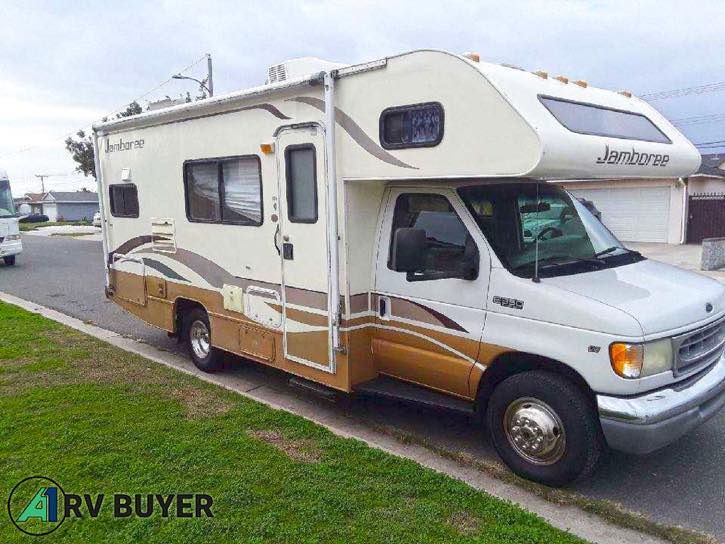
Hey, it’s Sonny at A1 RV Buyer. Roof damage is the number one reason people call me, and I hear the same worry every time: nobody’s going to want this thing. I’ve been buying RVs across Southern California for over 20 years, from Riverside and the Inland Empire out to Orange County, LA, San Diego, and Ventura, and I can tell you the truth from the buyer’s side of the fence: a damaged roof doesn’t make your RV unsellable, it just changes who the right buyer is. I buy rigs with leaks, soft spots, mold, and full-blown water damage as-is, no repairs, and I bring the paperwork. If you’d rather talk it through than read, call me at (562) 616-2636, I answer personally.
A damaged roof doesn’t mean a dead end
Here’s what most owners run into first. The dealership won’t touch a rig with water intrusion, and private buyers get one whiff of that musty smell and vanish. So the repair estimate starts looking like the only road, and that road is expensive. But there’s a third option, and it’s the one this whole page is about: sell the RV exactly as it sits, water stains and all, to a buyer who deals with roof damage every single week. That’s my lane. Minor leak or full water disaster, I’ll give you a fair cash offer and you’re done with it.
How RV roofs go bad in the first place
An RV roof lives a hard life, and in Southern California the sun does as much damage as the rain. Here’s what I see over and over when I climb up on these rigs:
- Age and UV wear. Rubber and fiberglass roof materials dry out, crack, and shrink over the years, and our sun accelerates all of it.
- Failed sealant. The caulking around vents, skylights, and AC units breaks down quietly. So the roof itself can be fine while water pours in around a ten-dollar seal.
- Tree strikes. One low branch at a campground, or years parked under the same tree, and you’ve got punctures or tears.
- Weather beating. Hail dents, wind-lifted seams, and long wet winters all weaken the structure a little more each season.
- Delamination. Once moisture gets between the roof layers, you get bubbling and warping, and that spreads.
How to tell if the water’s already inside
Roof damage usually announces itself indoors before you ever see it up top. So walk through your rig and look for these:
- Water stains or brown rings on the ceiling
- Soft or spongy spots when you press the ceiling or walk the roof
- Peeling or cracked sealant around any roof opening
- A musty or mildew smell that won’t air out
- Bubbling, cracks, or visible punctures on the roof surface
If you’re seeing any of that, the water’s been in there a while. And that matters for what comes next, because water damage never stays the same size.
Why water damage is the real problem
The hole in the roof isn’t the expensive part. It’s what the water does after it gets in:
- Rot in the framing. Wood structure weakens, and the rig loses its bones.
- Mold and mildew. A damp RV interior is a perfect breeding ground, and mold is a health issue, not just a smell, the EPA covers the health side here.
- Electrical trouble. Water and wiring don’t negotiate.
- Ruined floors and walls. Leaks travel, so damage shows up far from where the water came in.
And it moves fast. A leak you could cover with your palm in spring can rot a wall cavity by fall. That’s why I tell people: whatever you’re going to do with a water-damaged rig, sell it or fix it, do it soon, because waiting only lowers the number.
The repair-or-sell math, honestly
I’ll give it to you straight, because I’ve seen the invoices. A full roof replacement on a typical rig runs well into the thousands, and that’s before anyone opens the walls. Once water has traveled, you’re into framing repair, mold remediation, new flooring, and interior restoration, and on older RVs those quotes climb past what the finished rig would even be worth. Motorhomes hit harder than trailers here, because a Class A or Class C roof carries more built-in equipment and more complex structure, so the labor stacks up. Travel trailers have their own version of the problem: they depreciate fast enough that a major roof job rarely pays itself back.
So the honest question isn’t “can this be fixed.” Almost anything can be fixed. The question is whether you want to fund that project on a vehicle you’re trying to be done with. Most of the people who call me have already answered that one.
What your RV is still worth with roof damage
Roof damage lowers the value, I won’t pretend otherwise. But it doesn’t erase it, because a lot of the rig’s worth lives below the roofline. When I make an offer, I’m looking at the chassis and drivetrain, whether it runs and drives, the floor plan and length, the year and brand, the title situation, and how far the water actually traveled. A rig with a bad roof and a strong engine is still worth real money. So don’t let the ceiling stain convince you the whole thing’s worthless, it isn’t.

How selling to me works
- Call or send details. (562) 616-2636, or use the quote form. Tell me the year, make, model, and be straight about the damage, it won’t scare me off, and honest details get you an accurate number.
- Get your offer. A fair, no-obligation cash offer, usually within 24 hours.
- I handle the paperwork. Title, transfer, release of liability, all of it, done with you on the spot.
- You get paid. Cash in hand, and most sales wrap within about 48 hours of the first call. If you’re curious why some sales take longer, my guide on how long it takes to sell an RV breaks it down.
Roof damage questions I hear every week
There’s a tarp on the roof right now and rain’s coming. Can you still buy it?
Yes. A tarped roof tells me exactly what I’m walking into, and I buy rigs in that condition all the time. Don’t spend money on a patch job just to sell it to me.
I started the roof repair and stopped halfway. Is a half-peeled roof a dealbreaker?
No. I’ve bought plenty of rigs mid-surgery, membrane off, plywood exposed, parts on the counter. Leave it where it is and I’ll price it as it sits.
The walls are bubbling. Is delamination different from a leak?
It’s the leak’s older brother. Delamination means moisture already traveled between the layers, and it’s one of the most expensive things to reverse, which is exactly why selling as-is usually beats fixing it.
It smells like mold in there. Will you really still make an offer?
Yes. Mold changes the number, not the answer. I factor remediation into my offer and you skip the hazmat project entirely.
My RV also has engine or mechanical problems on top of the roof. Now what?
Same answer. Running or not, I’ll make an offer. A roof problem plus a motor problem just means the offer accounts for both.
What paperwork do I need to have ready?
Ideally the title, and I walk you through signing it correctly so nothing bounces at the DMV, my California title guide shows every line. Title’s missing? Call me anyway, that’s a solvable problem I handle often.
Turn the leaky rig into cash this week
You don’t have to fund a roof project, chase repair quotes, or convince a skeptical stranger on a marketplace that the smell is “not that bad.” I buy roof-damaged RVs, motorhomes, travel trailers, fifth wheels, and campers across all of Southern California, from the Inland Empire to the coast, and I come to you with the paperwork. Call me at (562) 616-2636, seven days a week, or grab your free quote here, and let’s get that RV out of your driveway and cash into your hand.